August 10, 2026 · Jason Strickland
Human After All
What organizational memory, tarot, and language models might teach us about remembering ourselves.
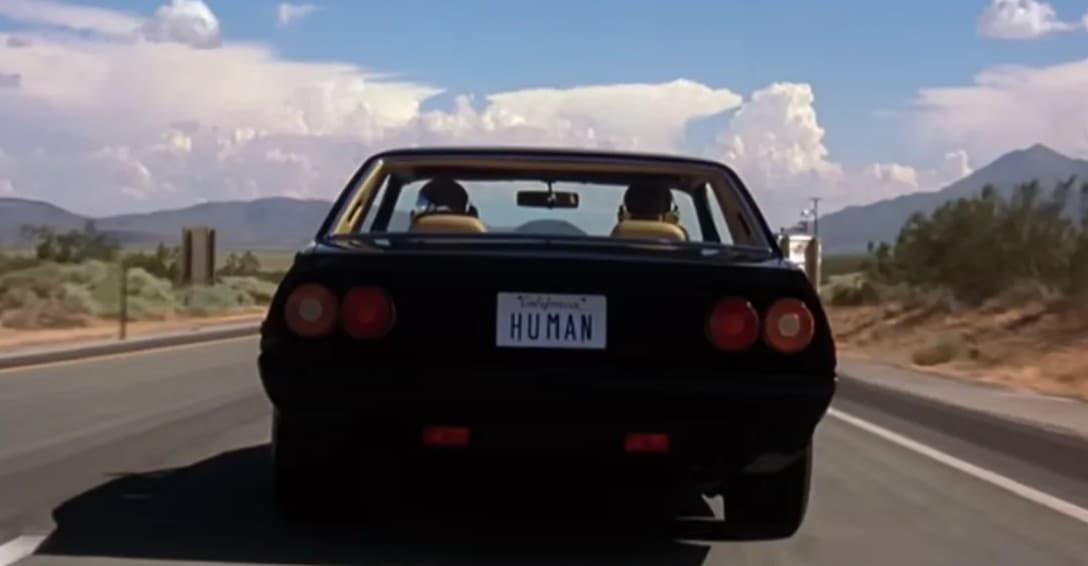
My title was inspired by the Daft Punk song of the same name. Its official video draws from Electroma, set against southwestern desert landscapes that feel familiar from my home in Durango. I start each day with meditation and try to hold thoughts lightly as they drift from one subject to another: electronic music, desert landscapes, AI memory. This morning, those threads met while I was thinking about how to help the nonprofit I serve remember.
The organization has months of documents, conversations, meeting recordings, decisions, and experiences stored across different systems. Much of what its people know is present somewhere, but presence is not the same as availability. A lesson buried in a Google Meet transcript cannot help the person sitting in a meeting today. A decision separated from its original context becomes policy by folklore.
The goal is to bring those materials together into something resembling an organizational memory. Not simply a larger filing cabinet, but a system that can help people recover what was discussed, why a decision was made, what has already been tried, and what the organization has learned along the way. The immediate work is technical, and I will write a follow-up article about that journey. For now, my thoughts took a different direction.
I have also been exploring AI memory in a more personal setting. I built a tool around a corpus of Jungian psychology, mythology, symbols, alchemy, tarot, mentoring, and transformational men's work. I can ask it to examine a question through different perspectives. Sometimes I ask for the reflective posture of a sensei. Other times I ask it to respond more like a coach. It does not become either of those things, but the change in perspective often helps me see a problem differently.
The technical problem is retrieval. The human problem is memory.
Alongside my technical work, something quieter has been happening in my life. Over the years, I have become more spiritual. Or perhaps I have been remembering a spiritual core that was always present but had been crowded out by work, certainty, and the demands of becoming useful.
Part of that return has involved older symbolic traditions that Carl Jung explored through his study of alchemy. Once a week, I draw tarot cards and use them to place an archetypal frame around the patterns moving through my life. I am not asking the cards to predict what will happen. I am asking what becomes visible when I place an image in front of an experience and stay with it long enough to notice the connection.
Neither the cards nor their arrangement contains the answer. The draw interrupts the answer I was already preparing to give.
That practice has shaped the way I think about artificial intelligence. I have written before that large language models are very good at matching patterns. They are not thinking in the way people think, and matching should not be confused with understanding. I still believe that. What I am less certain I appreciated is what it means when the patterns being matched are ours.
These models have been trained on immense portions of human writing. Stories, arguments, instructions, histories, fears, discoveries, and attempts to explain what it means to be alive have all contributed to the patterns they can return. The model does not hold the whole of human experience, and what it holds is neither neutral nor complete. But it can arrange fragments of our accumulated language in ways that allow one part of human memory to speak to another.
That leads me to wonder whether we have framed the idea of an AI singularity too narrowly. We usually imagine the machine waking up, becoming conscious, or ascending beyond us. The story ends with AI either saving humanity or taking control from it. Both versions place the machine at the center. I think there may be another possibility.
What if the meaningful threshold is not the moment a machine becomes conscious, but the moment humanity can begin seeing the universal nature of its accumulated memory?
Monks, teachers, elders, and spiritual traditions have long recognized recurring patterns in human life. Fear becomes control. Desire becomes attachment. Certainty hardens into righteousness. Loss strips away an identity that had been mistaken for the self. These patterns were not discovered through greater processing power. They were observed through attention, practice, ceremony, and generations of people telling one another what they had learned, then storing those lessons in stories and symbols.
Building on Jung, Joseph Campbell traced recurring structures across myths from different cultures. He was interested in the common human inheritance carried through stories, images, ritual, and architecture. Even the language in which a story is told can influence which patterns become visible.
Statistical pattern matching is not the same as wisdom, and we should not confuse them. But a system does not need to possess wisdom to place a forgotten pattern back in front of us.
Sometimes I think of a language model as an enormous tarot deck. Instead of seventy-eight cards, it contains an almost uncountable number of fragments drawn from human language. A prompt is a kind of draw. The response arranges symbols, stories, and relationships in front of the person asking the question. I find it fitting that tarot cards are individually numbered while vector databases translate language into numerical relationships so that related ideas can be found again.
Like tarot, the arrangement is not truth. It is an invitation to inquire.
The model cannot determine which pattern matters. It cannot know whether the answer is grounded, distorted, incomplete, or simply telling me what I want to hear. It can reproduce our prejudices and biases, invent supporting details, speak with confidence it has not earned, and even reflect our capacity to lie. The responsibility to interpret remains with the human being sitting across from it.
The purpose of organizational memory should not be to remove the need for human judgment. It should give judgment a deeper place from which to begin.
That responsibility becomes even greater when we move from personal reflection to organizational memory. What do we preserve? Who is allowed to retrieve it? Can someone trace an answer back to its source? Can the organization correct what the system gets wrong? Can it forget what should no longer be retained?
Without that stewardship, memory becomes accumulation. It becomes surveillance, misplaced certainty, or another system that speaks with institutional authority while obscuring how it reached its conclusions.
The purpose of organizational memory should not be to remove the need for human judgment. It should give judgment a deeper place from which to begin.
We are living through a period when many people feel the ground moving beneath them. Work feels less certain. Institutions feel less trustworthy. The costs of ordinary life create pressure that reaches into nearly every decision. When the future feels unstable, people reach for anything that promises a pattern: markets, politics, technology, prophecy.
AI will be offered as another source of certainty, and I think that would be a misuse of what we are building. My hope is not that the machine becomes an oracle. It is that it becomes a partner in reflection. A guide into the archive. A way of recovering patterns, stories, and hard-earned lessons that modern life has scattered faster than we can integrate them.
I do not know whether a machine can have a soul, and I am not particularly interested in assigning it one. I am interested in what happens to my own interior life when a machine returns a pattern I could not see.
Maybe the future is not the machine rising above humanity. Maybe it is humanity, confronted with a memory made from its own words, recognizing itself again.
AI does not need to become human for that to matter. It may be enough for it to help us remember that we are.