July 9, 2026 · Jason Strickland
Controlled Burn
What an overbuilt agentic system taught me about growth, governance, and the decisions no agent will make for us.
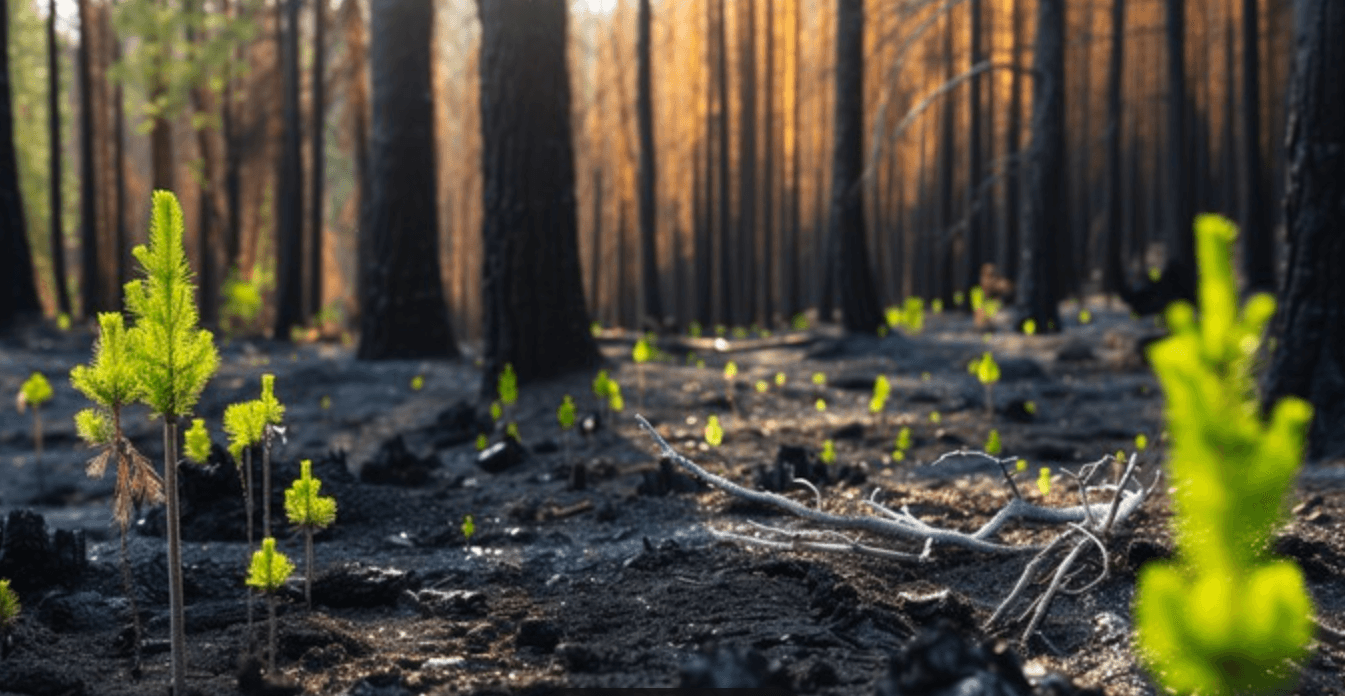
Like tornadoes in the Midwest and hurricanes on the Gulf Coast, living in Southwest Colorado is synonymous with fire. As I write this, the Gold Mountain Fire is burning two hours north of me and the Ferris Fire two hours west, more than ninety thousand acres between them. Not to bore anyone with fuel management principles from my forestry degree, but controlling fire is about managing growth. And as with everything I have written in this series, that ties straight back to AI governance.
In my last article I thought I had solved my QA problems by building a hardened, hash-enforced pipeline. In reality, I had jumped from one complexity trap into another. In a final attempt to map the entire mess, I commissioned an atlas of the system, and the agents produced a huge cartography library that was itself hard to understand. Third trap. That was the moment the lesson landed: unchecked, agents create surface, accretion, and complexity in any dimension you point them at. Code. Governance. Even the map of the map. I was captured in uncontrolled growth and needed a way to escape.
A controlled burn in a forest requires careful planning before anything is set alight. Brush is cut and piled, limbs are trimmed, fire lines are dug. Then you burn deliberately, clearing the unchecked growth and bringing the system back to a state where even natural fire behaves predictably. I took that exact approach to my AI system. I started with questions: What did I intend to build? Where did I end up? What do I actually understand? What am I scared to change? Then I built a drill for each function, reducing it to its basic components of proven value and working back up from there. One drill per function. Refined and repeated.
The end result: four Airtable bases, four corresponding skills, and a handful of small legacy Python scripts. That is the entire system now. Along the way I remediated issues I did not even know were happening and gained an intimate understanding of how each piece actually works. The change shows up in the day-to-day. Instead of watching a Claude Code console scroll past, I have working dialogues with Claude. Sometimes it makes the Airtable or skill change, sometimes I do. We both know exactly how the solution works. In the first article of this series I said to build the agent that tells you what you do not want to hear. Here is the postscript: no agent will ever tell you, “Delete me.” That call was mine to make, and making it was the point.
The difference between a wildfire and a controlled burn is not the fire. It is who decides where it stops.
The principle that came out of the burn: build to proven value, not projected capability. Every component earns its place through demonstrated use, and nothing irreversible happens without a human's hands on it.
That experience now has me researching where low-code platforms actually belong in the AI era, and mapping what I lived against the governance frameworks emerging globally. Singapore's IMDA published the first comprehensive governance framework for agentic AI this January, and its core recommendation matches my kitchen-table version: the more a system can act on its own, and the harder its actions are to reverse, the more meaningful human oversight it requires. The May update reinforces risk-based human oversight, including approval before higher-risk actions and review after lower-risk, reversible ones. The irony writes itself: the more automated the solution, the more humanity it needs.
Back to the analogy. Fast-growing, fire-prone country demands more management than slow-growth land like the Sonoran Desert. And highly agentic systems are the most fire-prone country there is. The difference between a wildfire and a controlled burn is not the fire. It is who decides where it stops.
This has been the most interesting, engaging, and exciting stretch of the journey so far. I am feeling the total frustration and the complete magic of this period of the AI era at the same time. I cannot wait for what the next chapter brings.
Originally published on LinkedIn on July 9, 2026.